
Playbook · Growth · Brand
Where go-to-market breaks for a good product
When a good product doesn't sell, the product is rarely the cause. Go-to-market breaks at one of five points, and each one can be checked in a week.

The product works. The first customers like it and some of them renew. Yet the pipeline stays thin, the website gets visits that go nowhere, and the team's answer is usually to build another feature.
A feature rarely fixes this. When a good product doesn't sell, the break is usually somewhere between the product and the person who should buy it. It is worth finding exactly where before spending anything on more reach.
Why this is harder now
AI has made the output of marketing cheap. A team can produce a hundred landing page variants, a month of posts and a sequence of cold emails in an afternoon. What it can't produce is the decision underneath: who this is for, and why they should care now.
When everyone can publish more, being clear matters more than being loud. AI expands what a small team can make. Judgment decides whether any of it lands.
Five points where go-to-market breaks
Where go-to-market breaks.
| Break point | What you see | First check |
|---|---|---|
| The buyer | Every message is general, and nobody feels addressed. | What do your last three closed customers have in common? |
| The message | Visitors read the features and leave. | Can a buyer say what changes for them after five seconds? |
| The channel | Paid reach brings traffic that never converts. | How did your existing customers actually find you? |
| The proof | Interest stalls at the same page every time. | Is there a reason to trust you where people hesitate? |
| The conversion moment | People start the form and don’t finish it. | How many fields and clicks stand between interest and a conversation? |
Fix the weakest point first. More reach only amplifies it.
1. The buyer is vague
"SMEs" or "product teams" is a market, not a buyer. If you can't name the role, the situation they are in and the moment they start looking, every message will be too general to land. Write down the three buyers you actually closed and what they had in common.
2. The message describes features
Features answer "what does it do?". Buyers are asking "is this for me, and what changes if I say yes?". Put the problem and the result first, in the buyer's own words, and the features second.
3. The channel doesn't match how they buy
Some buyers search. Some ask a peer. Some only move when a colleague forwards something. Look at how your existing customers found you before you pay to be found by strangers.
4. There is no proof at the moment of doubt
A new buyer needs a reason to trust you exactly when they hesitate: a named customer, a real number, a clear price, an honest answer to the obvious objection. Put it on the page where they hesitate, not on a separate page they won't open.
5. The conversion moment asks too much
The last step is often the most neglected. A long form, a vague button or a demo request with no date turns interest into nothing. Ask for the least you need, then show something useful straight away.
Three examples from our work
Each of these projects started at a different break point.
Talentiqa's AI assistant pre-screens candidates for high-volume hiring. When Lucie joined as fractional CMO, it had a name and nothing else. The first job was positioning: team keywords became six brand pillars, and 17 stakeholders rated four design directions before one went forward. The brand and website are now live.
Northouse had 17 new homes to sell to two very different buyers, families and couples nearing retirement. Persona analysis defined the realistic buyers first, and the website answers what each of them needs to see before getting in touch, including a price list and a five-step guide to buying.
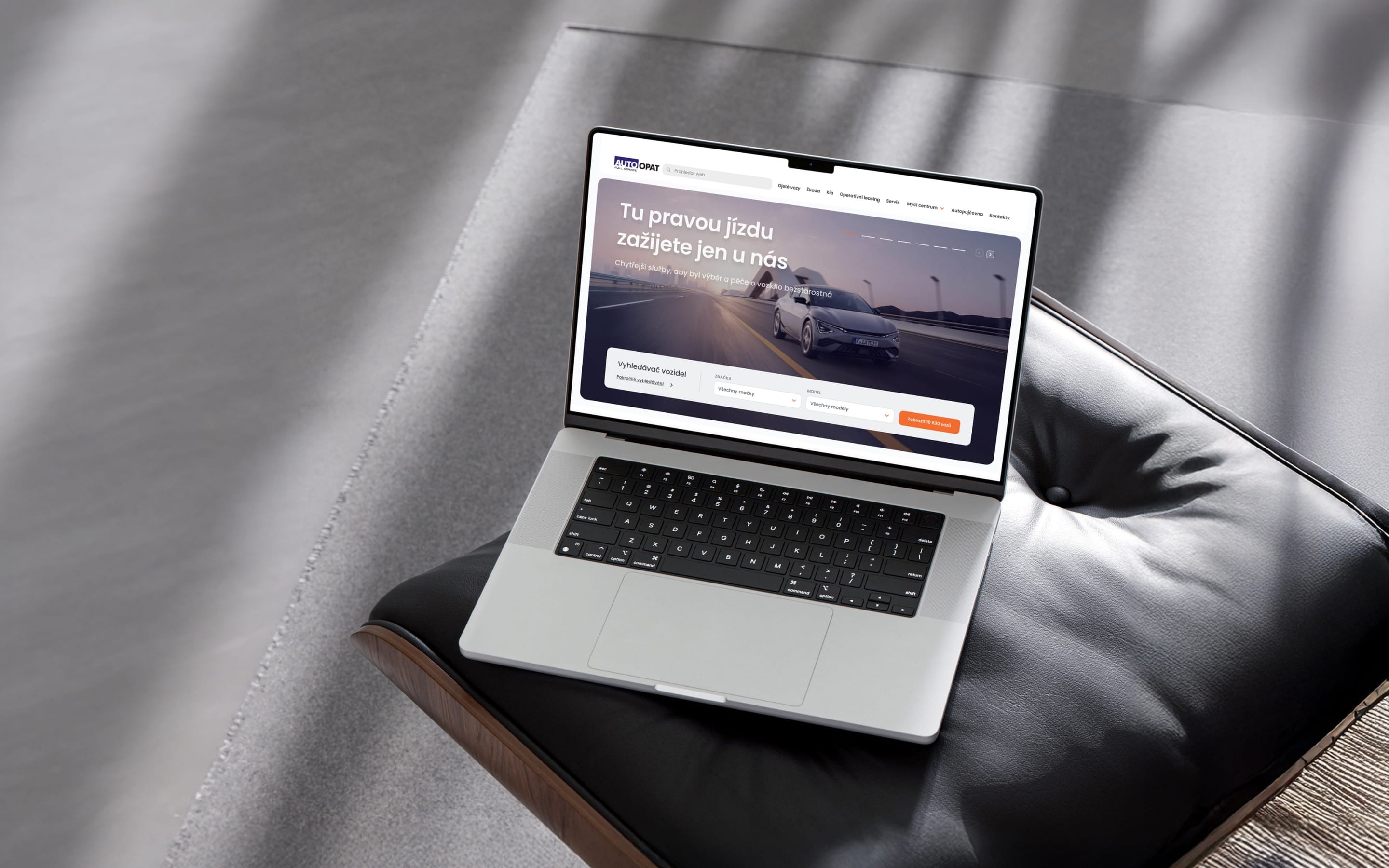
Auto Opat runs the largest indoor used-car dealership in the Czech Republic, so its website carries a very large inventory. We compared four search panels on how quickly each puts a matching car on screen, and the compact one won. Brand and model are the only questions before the first result. Auto Opat's sales director reports that the website conversion rate has increased by 23%.
What to do Monday
- Write down your last five closed customers: their role, their situation and how they found you.
- Read your homepage headline aloud to one of them. Ask what they think you do.
- Find the page where most visitors leave, and add the one piece of proof a hesitant buyer would need there.
- Count the fields and clicks between "interested" and "talking to you". Remove half.
- Pick the one break point that looks weakest, and fix only that for a month.
Finding the break point before adding reach is where our Go-to-Market & Growth work starts.
Where this leadsGo-to-Market & Growth
Tools for better decisions
AI Opportunity Scorecard
Ten questions about one task. You see the verdict, the best mode and the human role straight away.
Run the scorecardAI Product Quality Canvas
Eight boxes that pin down what an AI feature should do, how it fails and how you will know it works.
Open the canvas